
The American Dream as a Destructive Force
Death of a SalesmanThe theme of the American Dream, which promises success but delivers only failure and despair, as exemplified by Willy Loman's life.
increasing Bearing strength in each event
 decreasing
Bearing strength in each eventdecreasingThe Promise of the Dream
The Allure of Success
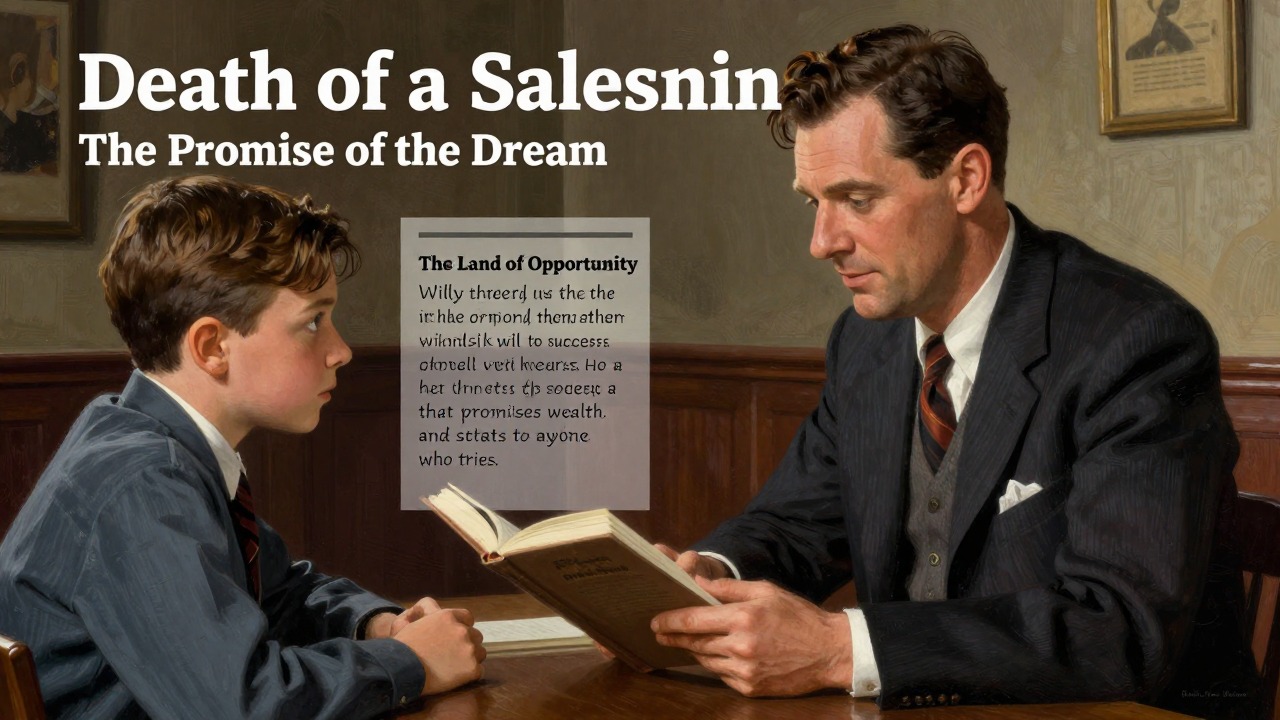
The Land of Opportunity
Willy believes in the American Dream: that hard work and personality will lead to success. He is a product of a society that promises wealth and status to anyone who tries.
The Faith in Being Well-Liked
Willy teaches his sons that being well-liked is the key to success. He believes that personal charm can open any door. The dream is built on a foundation of superficiality.
The Example of Dave Singleman
Dave Singleman, the old salesman who died in his green velvet slippers, is Willy's ideal. He represents a dream of being remembered and loved. But the dream is outdated.
The Failure of the Dream
The Crushing Reality
Willy's Bankruptcy
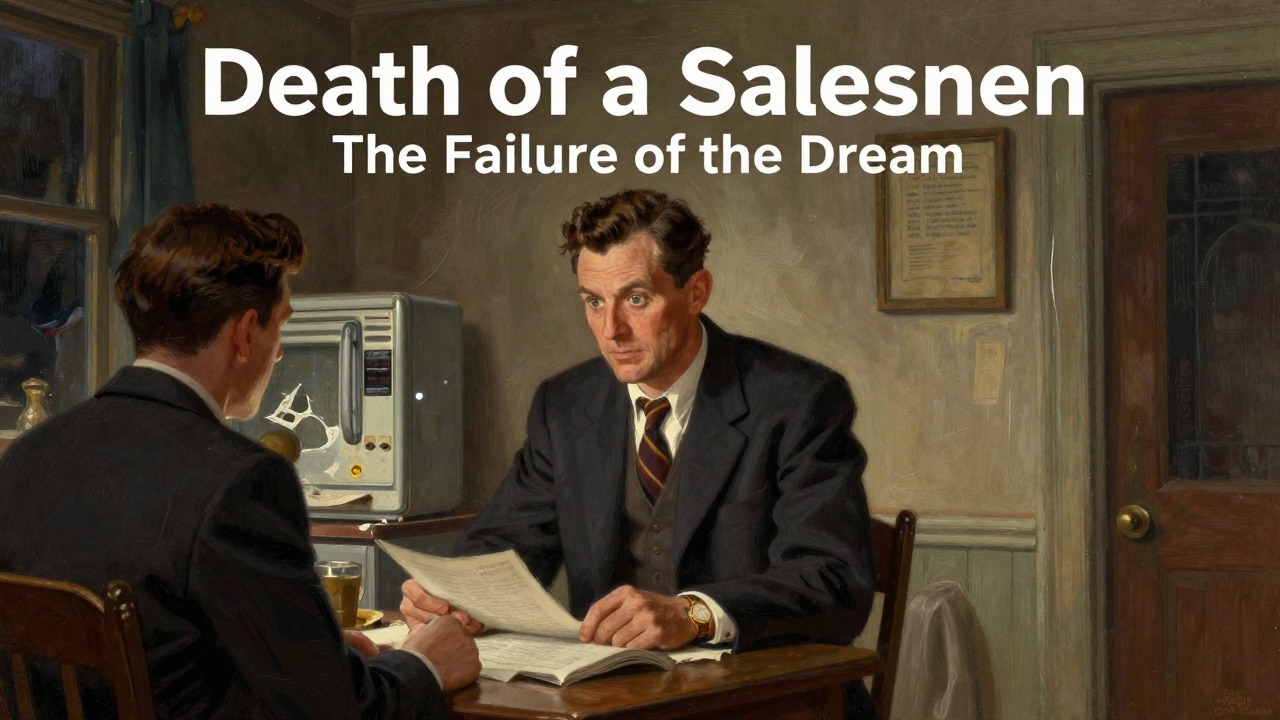
Willy is broke, fired, and hopeless. The dream has failed him. He has nothing to show for a lifetime of work. The house is not paid off, the appliances are broken, and his sons are failures.
The Cost of the Dream
The dream has cost Willy his sanity, his family, and his life. It has driven him to suicide. The play suggests that the American Dream is a trap that destroys the common man.
The Empty Promise
Charley's line, "The only thing you got in this world is what you can sell," is a cynical version of the dream. It reduces human worth to market value. The dream is hollow.
The Critique of the Dream
A Society's Betrayal
The False Promise
The play critiques the American Dream as a myth that blames individuals for systemic failure. Willy is not just a victim of his own flaws, but of a society that values profit over people.
The Alternative Paths
Biff chooses to reject the dream and seek a simpler life. Charley succeeds through hard work and pragmatism, not charm. Bernard succeeds through education. The play offers alternatives.
The Enduring Power
Happy clings to the dream, even after his father's death. The dream is a powerful force that continues to shape lives. The play does not offer easy answers, but it exposes the dream's dark side.
1920s, Willy's early career
Present day
Throughout the play
